

#Inside Residency | LEARNING TO BE A DOCTOR
THE MOMENT I KNEW I MADE A DIFFERENCE, EVEN IN A DOCTOR IN TRAINING
Meet Dr. Pham Tuan Nghia, an Internal Medicine Resident at VinUniversity, currently serving as a second-year Junior Resident at Vinmec Ocean Park International Clinic.
Let’s dive into a quick interview with Dr. Nghia to explore the daily life and inspiring journey of a Year-2 Resident at the clinic.
What does a typical day look like for a Year-2 Resident at the clinic?
“My day kicked off with the morning handover briefing. This is where residents and medical students gather to report and discuss the patients’ conditions from the previous day. During these sessions, attending physicians ask probing questions, analyze each case, and work with the team to identify pressing issues. We also decide whether any patients need closer follow-up in the coming days.
After the briefing, I head back to the clinic, log into the system, and prepare to welcome the day’s patients. The workflow begins when the nursing team checks the patients in, logs their information into the software, and guides them into the examination room for me to evaluate. Once the check-up is complete, I consult with the attending physician to agree on a treatment plan. If necessary, I can order lab tests or prescribe medications, all of which are reviewed and approved by the attending physician before implementation.
In the afternoon, my focus shifts to making follow-up calls. I reach out to patients we’ve previously treated to monitor their recovery and ensure they are receiving the best possible care.”
Over the past year as a VinUni Internal Medicine Resident, is there a memorable experience you would like to share?
“Before rotating to the Ocean Park Clinic, I had the opportunity to train at Vinmec Hospital and the 108 Central Military Hospital. One particularly memorable experience happened recently when a patient was admitted with an acute exacerbation of COPD and was being monitored for pneumonia. However, on the fourth day of treatment, the patient’s condition suddenly deteriorated—they developed respiratory failure and required intubation. When I assessed the patient, I recognized signs of acute coronary syndrome (ACS), specifically a myocardial infarction complicated by heart failure. Fortunately, making the diagnosis in time allowed us to transfer the patient immediately to the catheterization lab, and their life was saved. That moment made me feel that, even during this relatively short period while I was still “learning to be a doctor,” I was able to make a meaningful contribution.
At the same time, there have also been experiences that were emotionally challenging. One that has stayed with me involved a patient with end-stage cancer whose family decided to take them home for end-of-life care. The patient was still conscious and could hear the conversations around them. Seeing the look in their eyes filled me with sadness and a sense of helplessness. Although I understand that medicine has its limits, knowing that there was nothing more I could do for them is something that continues to weigh on my mind.”
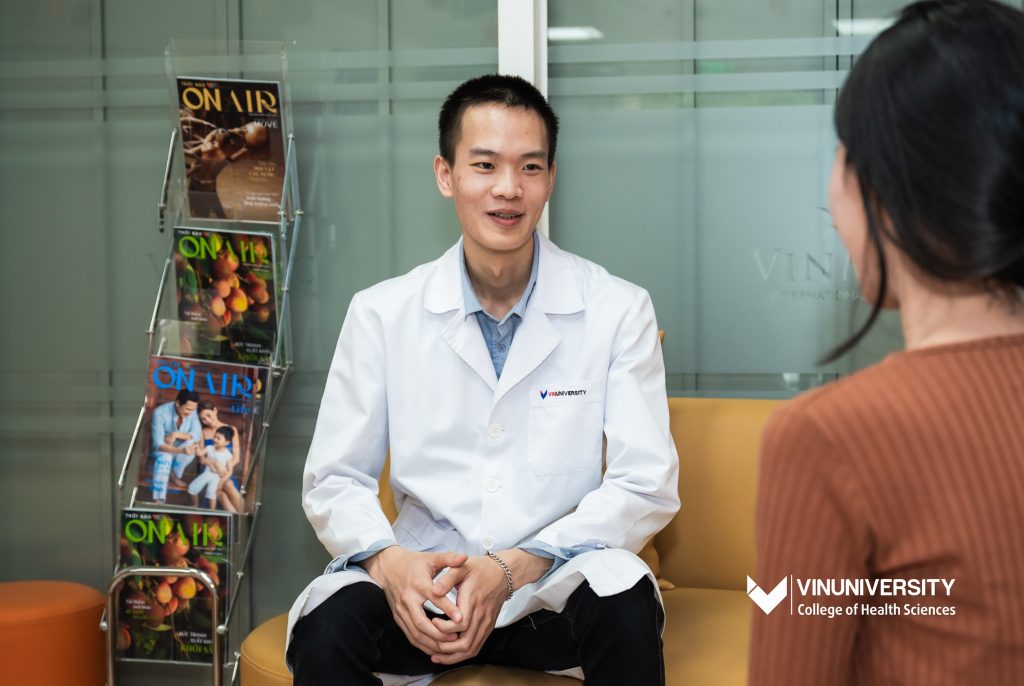
Dr. Pham Tuan Nghia sharing his journey in Internal Medicine Residency Program at VinUniversity
Compared to your first year, now that you’re a second-year Internal Medicine resident, have you noticed any differences or growth in your clinical skills?
“My rotation at the outpatient clinic only began in my second year. Overall, I feel much more confident in taking patients’ histories, conducting physical examinations, and making clinical diagnoses.
During my first year, my main focus was learning how to approach patients and becoming familiar with the clinical workflow. By my second year, however, after encountering a wide range of medical conditions and clinical scenarios, I’ve become much better at recognizing and differentiating between different diseases. This has given me greater confidence in making clinical decisions, and I now rarely need my attending physician’s assistance during follow-up consultations. I feel that I’ve become more independent in my clinical reasoning, decision-making, examination skills, and overall in fulfilling my role as a second-year resident.”
Thank you very much, Dr. Phạm Tuấn Nghĩa, for taking the time to speak with us. We wish you continued success and all the best in your residency and future career!
